
Overview
Aydın is a province in south-western Turkey, within the Aegean region (plate code 09). It covers 8,116 km2, has 17 districts, including Efeler (the central district), Didim, Kuşadası, Nazilli, Söke and Germencik, and had a population of 1,148,241 in 2022. It borders Manisa, İzmir, Denizli and Muğla. Fertile plains in the central and western parts are watered by the Büyük Menderes River, the Aydın Mountains lie to the north and the Menteşe Mountains to the south. The western end meets the Aegean coast, with Lake Bafa in the Menderes delta area.
The city of Aydın stands on the ancient city of Tralles, which Strabo credited to the Argives and Trallians. After an earthquake in 26 BC, Augustus funded its rebuilding and the city renamed itself Caesarea. The Ottomans took it definitively in 1425, and the name Aydın comes from the Aydinid dynasty. Wikipedia notes that the İzmir to Aydın railway was among the first in the Ottoman Empire.
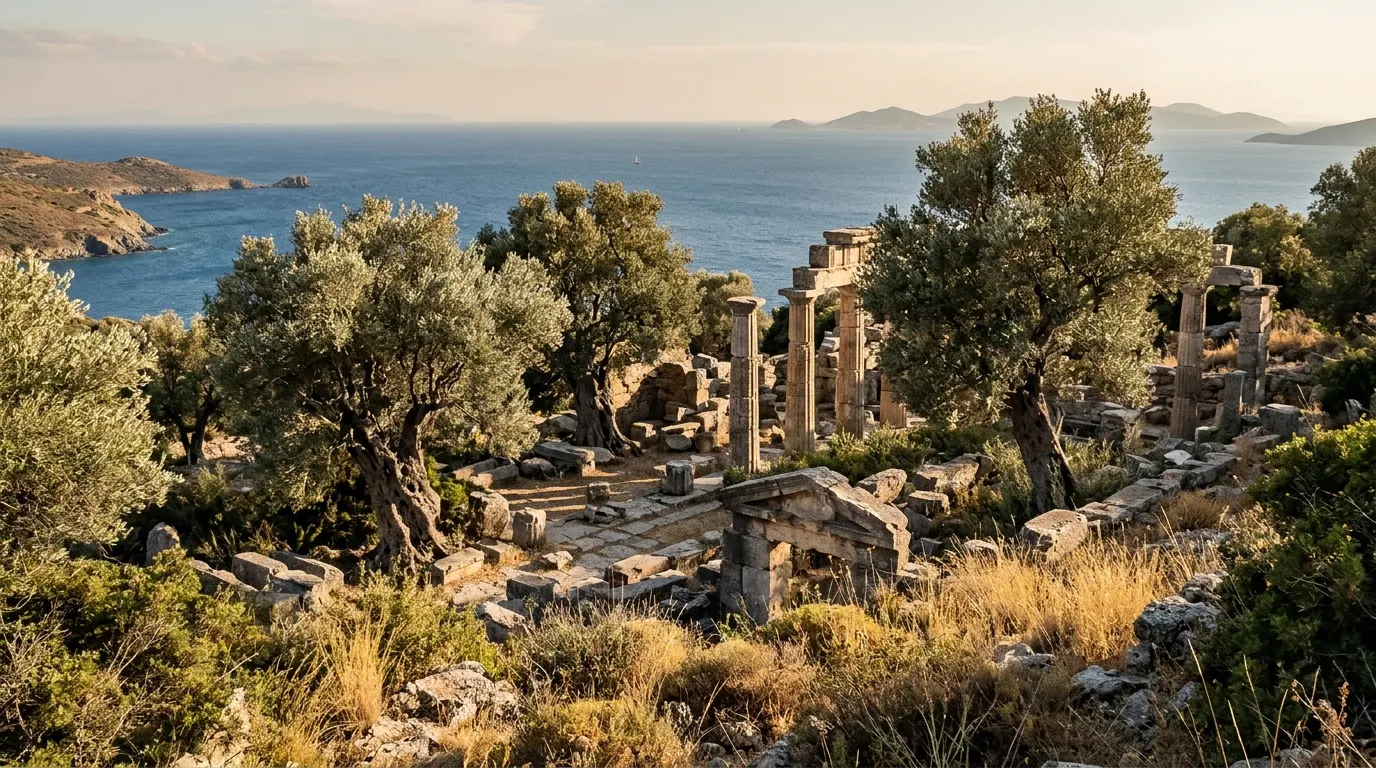
The province is mainly visited for its ancient sites, which include the Temple of Apollo at Didyma, the theatre at Miletus, Aphrodisias with its Sebasteion, Priene, Nysa and Magnesia ad Maeandrum, and for the resort towns of Kuşadası and Didim. The Germencik area has several hot springs.
Best time to visit
Aydın has a hot-summer Mediterranean climate. Summers are very hot and dry, with highs above 35°C on most summer days, spring and autumn are mild and variable, and winters are mild and fairly rainy. Snow is rare; the last recorded snowfall in the city was in February 2012. Average annual precipitation is about 653.5 mm.
No source names a best season. Wikivoyage’s Kuşadası guide notes that summer brings many tourists and crowded beaches, and that some ferry sailings run only from April to October. Given the heat, visiting open-air archaeological sites such as Miletus or Aphrodisias outside midsummer is a sensible plan.
How to get there
- By air: Wikivoyage points to İzmir Adnan Menderes Airport (ADB) as the nearest major airport for Kuşadası.
- By road: For Kuşadası from Istanbul, Wikivoyage describes taking the O-5 toll road to İzmir; from Ankara, the E96, then the E87 south, then the D550 and D515.
- By bus: Direct buses from Istanbul to Kuşadası take 9 to 10 hours via Bursa, İzmir and Selçuk. Otherwise take a bus to İzmir and change. The Kuşadası bus station is on the eastern edge of town.
- By rail: The nearest station for Kuşadası is at Selçuk, about 20 km north-east. IZBAN suburban trains run from İzmir, passing the airport, and regional trains run from Denizli.
- By sea: The Kuşadası harbour is a frequent cruise stop, and passenger ferries run to Samos in Greece, foot passengers only; Greek entry rules apply.
- Aydın city: The sources fetched give no direct transport details for Aydın city itself, so check current timetables.
Main places to see
Didyma Temple of Apollo and Miletus theatre. Both are near Didim, according to Wikipedia. The official directorate lists Miletus (Milet), the Apollo temple and Altınkum beach in Didim.
Aphrodisias. In Karacasu district, with its Sebasteion; listed on the official site as Afrodisias.
Tralleis (Üçgözler). The ancient city of Tralles at Aydın, with Roman ruins including a gymnasium and a theatre. The official site also lists Tralleis.
Aydın Archaeological Museum. Named by Wikipedia among the places to visit in the city.
Ottoman mosques. Ramazan Paşa, Süleyman Paşa and Cihanoğlu mosques in Aydın, plus the Ilyas Bey Complex built in 1403 (named in the province article).
Priene, Nysa, Magnesia ad Maeandrum, Alinda and Alabanda. Other ancient sites named in the province article. Priene and Miletus are hard to reach by public transport from Kuşadası, so a taxi hired for a few hours is practical.
Kuşadası and Güvercinada (Pigeon Island). A resort on the Central Aegean coast. Pigeon Island is reached by a causeway and has a restored castle museum. The official site also lists the port and a caravanserai.
Dilek Peninsula and Büyük Menderes Delta National Park. Forests, hiking trails and secluded beaches near Kuşadası.
Lake Bafa. Listed on the official site and in the province geography.
Ephesus and Selçuk. Ephesus lies about 15 km north-east of Kuşadası, though just across the province border in İzmir, and is an easy day trip according to Wikivoyage.
Getting around
- Dolmuş: The main way to travel along the coast around Kuşadası; flag one down heading in your direction.
- Taxis: Plentiful, but Wikivoyage warns of fake taxis; legitimate plates start with 09 T.
- Ephesus: Taxis cluster at the port and bus station, and dolmuş is also easy.
- Ancient sites: Priene and Miletus are hard to reach by public transport, so a hired taxi or a tour is more practical.
- Aydın city: Wikipedia mentions the Pınarbaşı-Aytepe gondola among its sights.
Practical tips for visitors
- The Adnan Menderes Democracy Museum in Aydın was listed by the official directorate as temporarily closed for repair and exhibition work, so check before visiting.
- Beaches are free to access but heavily commercial, and pickpockets are a concern.
- Hotels popular with package tours can be noisy, and Kuşadası has no hostels, although budget hotels and pansiyons are available.
- 4G works across Turkish carriers, including toward Ephesus; cruise day-trippers should check roaming charges.
- Watch for scammers, especially among taxi drivers.
- Open-air sites have little shade, so carry water and sun protection in summer.
- Plate code
- 09
