
Overview
Giresun is a province on Turkey’s Black Sea coast (plate code 28). It covers 6,972 km2, has 16 districts, including Alucra, Bulancak, Espiye, Görele, Tirebolu and Şebinkarahisar, and had a population of 450,862 in 2022. It borders Trabzon, Gümüşhane, Erzincan, Sivas and Ordu and is listed in the East Black Sea statistical region. The provincial capital is Giresun, a city of about 144,000 residents in 2023 in the Eastern Karadeniz region.
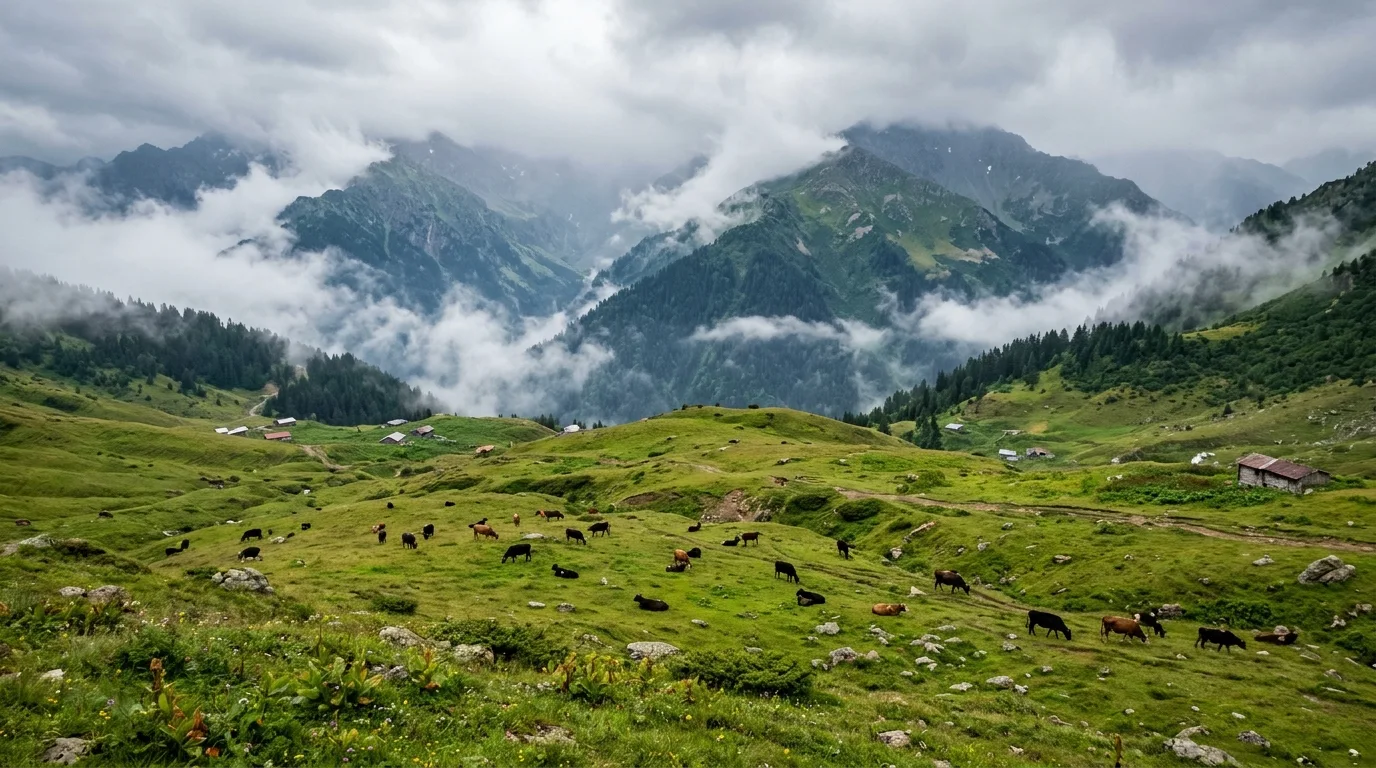
Lower areas near the coast are agricultural, and the province is a major hazelnut producer. Higher up, mountains are covered in forest and pasture, and mountain villages are remote, with steep slopes that limit farming. Wikivoyage says the area is known for cherries and that the strip between Giresun and Ordu supplies a large share of the world’s hazelnuts. The city attracts mostly domestic tourists, and international visitors are rare.
Wikipedia names Kuşköy, a village known for a whistled language that the page describes as about 400 years old, among the province’s sights. The official Ministry of Culture and Tourism directorate site lists a set of protected sites in the province, including Giresun Island, Giresun Castle and the Zeytinlik quarter.
Best time to visit
Wikipedia describes the climate as typical of the Black Sea coast and very wet. Wikivoyage does not cover climate or the best season, so no source names one. Because it rains often, bring waterproofs whenever you visit, and check weather forecasts before heading to the plateaus and mountain villages.
Note that coastal areas have 4G from all Turkish carriers, but Wikivoyage says there is no signal in the mountains to the south, so download maps in advance if you plan a plateau trip.
How to get there
- By air: Ordu-Giresun Airport (OGU) is about 32 km west of town, with frequent flights from Istanbul and daily flights from Ankara and İzmir. A Havaş shuttle runs downtown and dolmuşes run from the nearby highway. Trabzon Airport is 137 km east.
- By bus: Giresun Otogar, the intercity bus station, is 4 km west of the old core. Buses from Istanbul take about 15 hours and from Ankara about 11 hours, and most continue to Trabzon (about 2 hours).
- By road: The coast road connects Giresun with Ordu to the west and Trabzon to the east.
Main places to see
Giresun Castle. A citadel on the promontory, open round the clock according to Wikivoyage, with the tomb of Topal Osman, Atatürk’s bodyguard. The official site lists the castle as a first-degree natural site.
Giresun Island. A small island about 1.2 km offshore, reached by boat. Ruins include a temple, Roman fortifications and a monastery. The official site lists it as a second-degree archaeological site.
Giresun Museum. Housed in a former 18th-century Greek church, the Gogora Church, according to Wikivoyage and the official site.
Zeytinlik. An old quarter with Ottoman merchants’ mansions, listed as a third-degree urban site.
Kuzalan Nature Park. About 47 km south of the city, with waterfalls, the blue-tinted Mavi Göl lake and travertine pools at Göksu.
Şebinkarahisar. A district inland with a castle and an Atatürk house museum, named by Wikipedia and the official site, which also lists the Taşhanlar.
Tirebolu Castle and Tripoles Castle. Named by Wikipedia among the province’s castles.
Highland plateaus. Wikipedia names the Karagöl and Bektaş pastures, and the official site lists the province’s plateaus and nature parks.
Beaches. The best, according to Wikivoyage, are west of town at Teyyaredüzü.
Getting around
- On foot: The old core is walkable.
- Dolmuşes: The town stretches along the coast, so dolmuşes serve the main streets.
- Boats: Giresun Island is reached by boat from the coast.
- Inland sights: Kuzalan, Şebinkarahisar and the plateaus are far from the city, and you will need a car or a tour. Check road conditions in wet weather.
Practical tips for visitors
- Small supermarkets are usually open from 08:30 to 22:00.
- Free-standing bars closed during Covid, so cafés and restaurants are the main options.
- Hazelnuts and hazelnut products such as butter are abundant. Check your home country’s import rules before taking them back.
- The old town has several local eateries, including Ziyade, Bohca Manti, Haşlamacı (for soup) and Mustafa Patar (for desserts), according to Wikivoyage, and a string of restaurants lines the seafront to the west.
- Check the opening times of the museum and sites before you go.
- Mountain villages are remote, so plan fuel and supplies.
- Plate code
- 28
