
Overview
Trabzon is a province on Turkey’s eastern Black Sea (Karadeniz) coast, with its capital city, also called Trabzon, holding about 323,000 residents in 2023 and roughly 500,000 more living in surrounding towns. Known historically as Trebizond, the city was founded around 756 BC by Greek settlers from Sinop, who chose a sheltered port between two ravines. It later served as the capital of the Empire of Trebizond until the Ottomans took it in 1461.
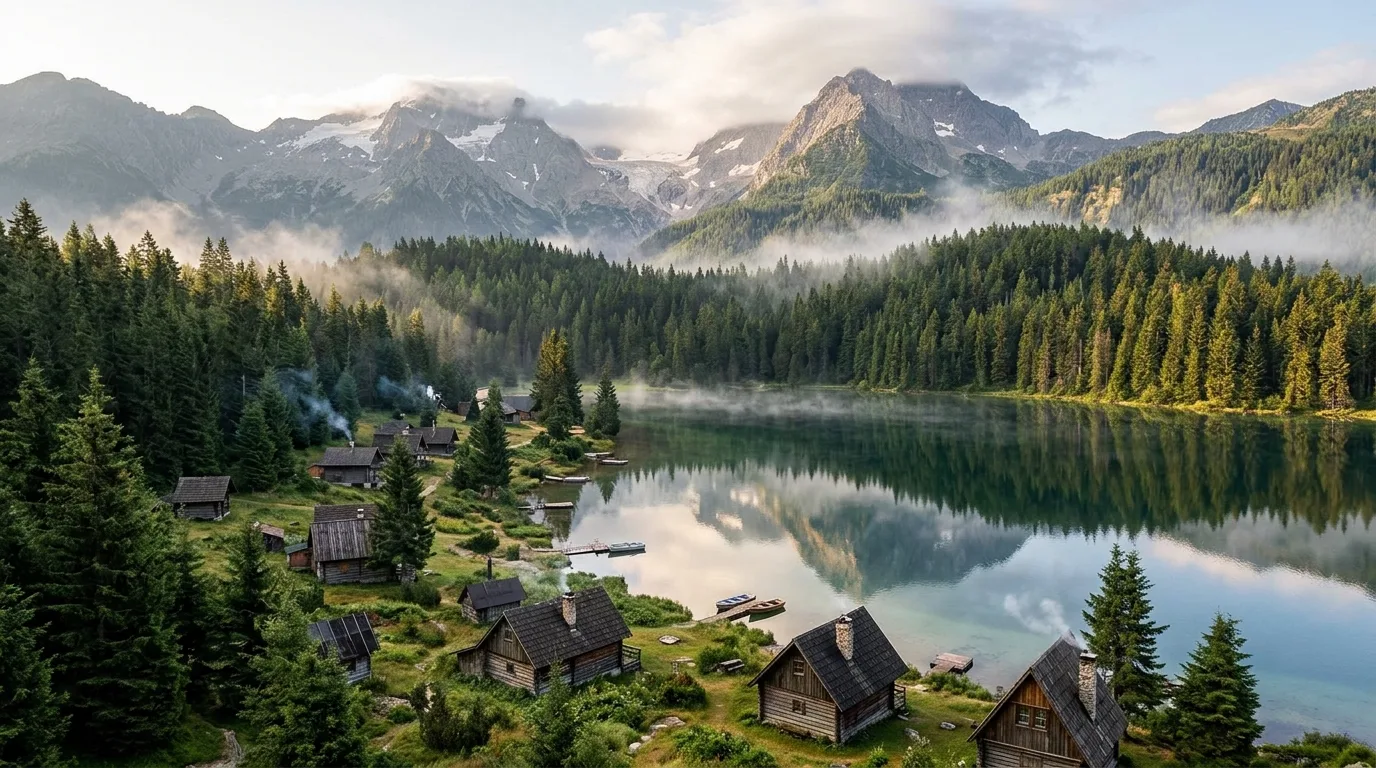
Visitors come for Byzantine churches and monasteries, a cliff-side monastery in the mountains, the lake and highland scenery around Uzungöl and the Black Sea coast itself. The mountains behind the city are steep and green, and the old city sits on a ridge between two ravines.
Best time to visit
The surrounding mountains attract cloud and rain, so expect damp conditions at any time of year. Summer is warm and humid with frequent light showers and is generally a good time to visit, though nights can feel muggy. Autumn is the wettest season. Winter brings near-freezing temperatures, with occasional warm spells when southerly winds push temperatures towards 20 degrees Celsius. Spring is dry and mild, with sunshine between clouds.
How to get there
- By air: Trabzon Airport (TZX) is the main gateway. Direct international flights come mainly from Saudi Arabia, the Gulf and Northern Cyprus, with few from Europe. Domestic links are strong: roughly hourly from Istanbul (both IST and SAW), and at least daily from Ankara, İzmir and Adana. A Havaş shuttle bus serves the city centre, and car hire is available at the airport.
- By bus: Long-distance buses arrive at the Otogar, about 3 km east of the centre, which has a free shuttle into town. Journey times are about 18 hours from Istanbul, 12 hours from Ankara, 4 hours from Erzurum and 3.5 hours from Erzincan. A daily bus runs to Batumi in Georgia in about 6 hours via the Sarp border.
- By road: The D010 is a six-lane coastal highway. Samsun is about 4.5 hours west and the Georgian border at Sarp about 2.5 hours east. The E97 crosses the mountains inland via Gümüşhane to Erzurum. The D915 is a scenic inland shortcut but is narrow and demanding, and should be avoided in winter.
- Not available: Trabzon has no railway, and passenger ferries across the Black Sea are not currently running.
Main places to see
Hagia Sophia of Trabzon. About 3 km west of the centre, this Byzantine church with frescoes and friezes dates to the 1250s. It became a mosque in 2013, and pre-Islamic features were partly uncovered in 2020. Its free-standing bell tower dates to 1427. Dolmuşes marked “Aya Sofya” serve it.
Sümela Monastery. Built into a cliff face in the Altındere Valley National Park near Maçka, the monastery was founded in the 4th century. It has frescoes and mosaics, some damaged and others found in hidden rooms. Access is by minibus from the parking area, and arriving early helps avoid tour groups.
Uzungöl. About 95 km from the city at an elevation of 1,090 m, this lake was formed when a landslide blocked a valley. It is a summer resort reached via the D915 towards Çaykara, with yaylas (highland summer hamlets) above it.
Atatürk Pavilion (Soğuksu). A late 19th-century summer villa built for a banker. Atatürk stayed here several times from 1924, and it is furnished with his memorabilia.
Kızlar Manastırı (Girls Monastery). A rock church on Boztepe hill, built in the 1360s, with frescoes of a Byzantine imperial family. It was restored in 2021.
Kalepark Fortress. A ruined castle near the seafront, rebuilt by the Genoese after 1306.
Other sites in the city include St Anne’s Church, a 6th or 7th century Greek Orthodox basilica, the İskender Paşa Mosque, the City Museum, the Trabzon Aquarium and the Botanical Garden above the city. Akçaabat, 18 km west, has historic wooden mansions, and Sürmene, 40 km east, has a ruined medieval castle.
Getting around
- On foot: The main sights around Meydan (the central square), the bazaar and the old walled city are within about 1 km of each other, but the terrain is steep.
- Dolmuş: Shared minibuses cover the city and province. Within town they usually start from the southeast side of Meydan. Out-of-town services leave from the Dolmuş Gar on Çömlekçi Caddesi, about 200 m southeast of Meydan.
- Taxis: Available at the south end of Meydan.
Practical tips for visitors
- Turkish is the working language. The local Black Sea dialect can be hard for visitors, and English is less common than in Ankara or Istanbul, though younger people in service jobs may speak some.
- The tourist information office is on Belediye Caddesi, east of Meydan, and is open Monday to Friday, 08:00 to 17:00, with limited English.
- Tap water is safe but heavily chlorinated, so many visitors prefer bottled water.
- 4G mobile coverage is available from all Turkish carriers.
- Local tour operators offering hiking, rafting and skiing had not fully resumed operations as of 2025. Independent travel in the mountains requires local knowledge and caution, and bears are present.
- Standard urban precautions apply, including watching for traffic and securing valuables. Avoid demonstrations, which sometimes gather around the Atatürk statue in Meydan.
- Trabzon has a 24-hour hospital emergency room in the centre and a university hospital near the airport.
- Check current hours and access arrangements for churches, monasteries and mountain roads before travelling, especially outside summer.
- Plate code
- 61
- Best season
- Summer, and dry mild spring
