
Overview
Diyarbakır is a province and metropolitan municipality in south-eastern Turkey (plate code 21), with the city of Diyarbakır as its seat. Wikipedia gives its area as 15,101 km2 and its population as 1,804,880 in 2022, in 17 districts. It lists the province in the Southeast Anatolia statistical region and describes it as a Kurdish-majority province within Turkish Kurdistan.
Wikipedia places the Çayönü Neolithic site in Ergani district. The article says many civilisations ruled the area, including the Akkadians, Hurrians, Hittites, Romans, Byzantines, Seljuks, Mongols, Safavids and Ayyubids. Foreign citizens could not travel to the province until 1965. The 1975 Lice earthquake (magnitude 6.7) led to the town being re-established about 2 km to the south. From 1987 to 2002 the province was part of a state-of-emergency region set up against the PKK. In 2021 archaeologists claimed to have found the grave of the Seljuk sultan Kilij Arslan I in Silvan, and Wikipedia also says that archaeologists announced genetic research of skeletal remains from Çayönü Hill dating to about 12,000 years ago. Wikipedia names the Great Mosque of Diyarbakır, the Malabadi Bridge and the Çayönü Neolithic site as sights.
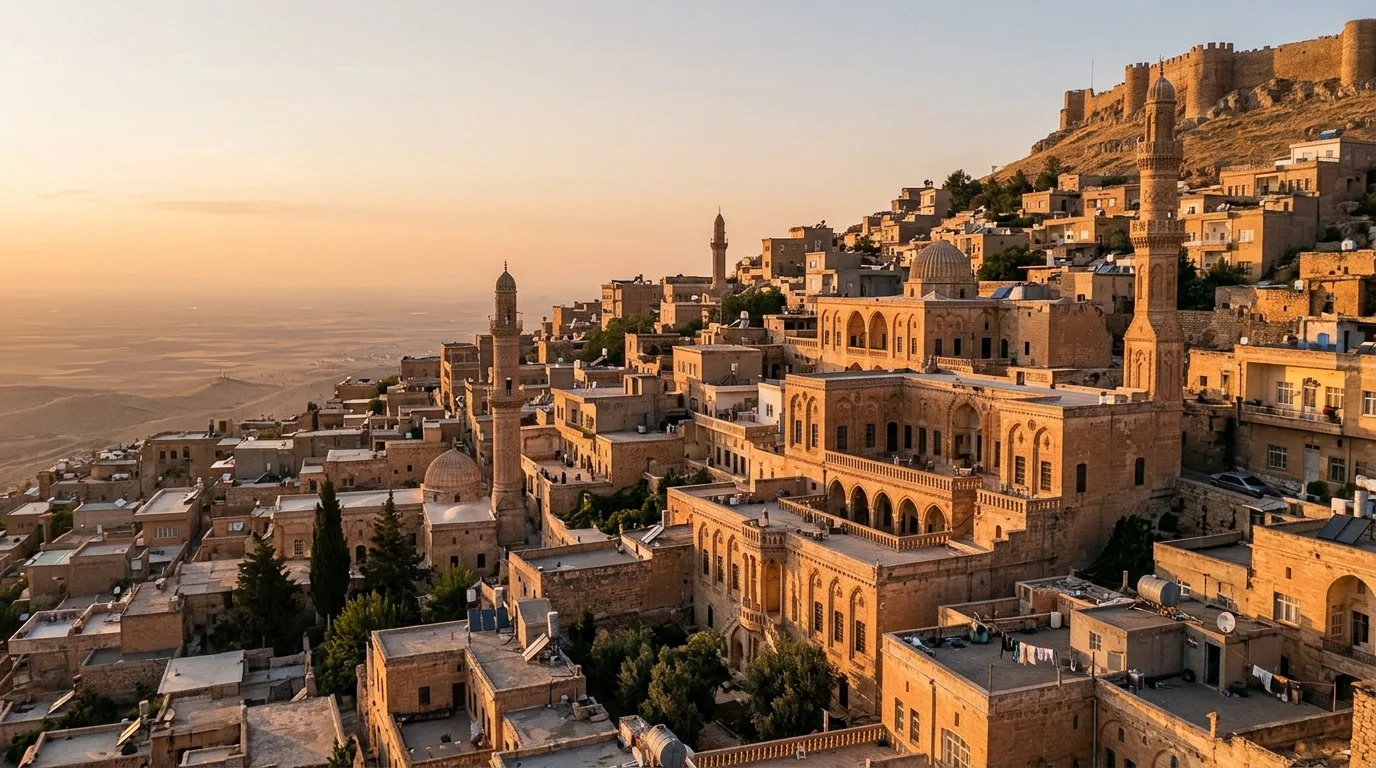
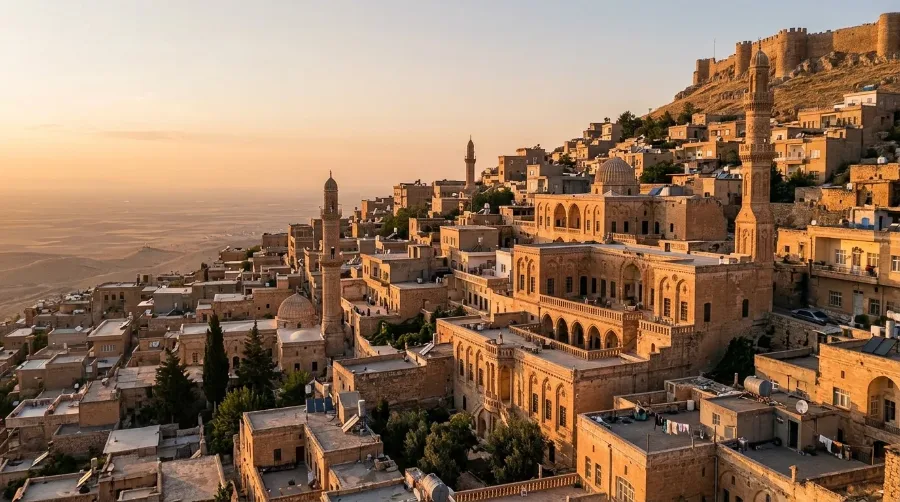
Wikivoyage describes the city, with a 2024 population of 1,165,000, mostly Kurdish, who call it Amed. Its main attraction is its citadel and old town, enclosed by great black basalt walls. The page says the city has been a flashpoint in the struggle for Kurdish autonomy and that it was badly damaged by riots in 2016 and again in 2023 by the Kahramanmaraş earthquake. These are historical statements as of Wikivoyage’s current text; the sources do not report the present state of repairs or of any particular site.
The official culture and tourism directorate site (diyarbakir.ktb.gov.tr) could not be reached during this research, so no Turkish official source is cited and practical details come from Wikivoyage.
Best time to visit
The sources do not state a best time to visit. Wikivoyage says the city sits on a plateau at an altitude of 675 m, with baking hot summers and bitter winters, and advises picking a hotel with air conditioning in summer. Wikipedia gives no climate information.
Given the page’s description of the extremes of summer and winter, travellers should plan clothing and activities for both heat and cold, but neither source gives monthly temperatures or recommends particular months.
How to get there
- By air: As of Wikivoyage’s current text, Diyarbakır Airport (DIY) has flights from both Istanbul airports, Ankara, Izmir and Antalya, and is 15 km from downtown. Schedules change; check airlines.
- By road: From Ankara the simplest route is 1,010 km via the toll motorway, Adana, Urfa and the E99. An alternative via Kayseri and Malatya is 910 km, with a similar travel time of about 11 hours.
- By bus: Wikivoyage gives approximate times of 20 hours from Istanbul, 14 hours from Ankara, 7 hours 30 minutes from Van and 8 to 9 hours from Erbil. The bus terminal is 10 km west of the centre.
- By train: Wikivoyage describes the Güney Kurtalan Ekspresi from Ankara, taking about 22 hours 30 minutes, and a regional train from Batman taking about 2 hours 10 minutes. Train timetables change, so confirm with the operator. The station is 1 km west of the old town.
Main places to see
City walls. First erected in AD 297 by the Romans and repaired ever since, 5.5 km long, though the eastern section is tumbledown.
Great Mosque (Ulu Camii). Wikivoyage calls it the oldest mosque in Anatolia, built in 1091 by Malikh Shah, a Seljuk emir.
Surp Giragos Armenian Church. Founded in 1515 and built in its present form in 1883, restored to reopen in 2011, badly damaged in civil strife in 2016, and reopened for services in 2022, according to Wikivoyage.
Diyarbakır Fortress. Wikivoyage says the inner fortress holds the main sights: the archaeology museum, St George Church and the Atatürk Museum. Check opening times locally.
Virgin Mary Church (Meryem Ana). A Syrian Orthodox church founded in the 3rd century, according to Wikivoyage. Check opening times and any entry fee locally.
Sülüklü Han. A caravanserai built in 1620, according to Wikivoyage.
Ongözlü (Ten-Arched) Bridge. Completed in 1065 and a footbridge since 2009.
Mosques. Wikivoyage dates the Sheikh Mutahhar Mosque to 1500 and the Kurşunlu Cami to 1520; and the Hazrat Suleiman Mosque was completed around 1160 and rebuilt in 1631.
Gazi Köşk. A mansion where Atatürk stayed during the War of Independence.
Hamams. A dozen in the old city; the Yeni Paşa Hamamı, built in the 1560s, is no longer in use.
Zerzevan Castle. A Roman citadel with a temple to Mithras, 45 km south-east of the city. Wikivoyage says archaeological work only started in 2014 and continues, and that there is a lot of uneven ground. Check opening times locally.
Malabadi Bridge and Çayönü. Named by Wikipedia in the province article without further detail.
Getting around
Wikivoyage says the old town is within a walkable area, and buses and dolmuş minibuses run along the main avenues. Taxis and dolmuşes connect the bus terminal to downtown. Zerzevan Castle lies 45 km outside the city, and the page does not describe public transport there.
Practical tips for visitors
- Wikivoyage says tap water may not be safe to drink because of ancient pipework, and recommends bottled water.
- Wikivoyage’s safety section says not to be out at night alone.
- Wikivoyage says there is a heavy police presence with frequent checkpoints and to always carry your passport.
- Check your government’s official travel advice before travelling; the sources describe past unrest and earthquake damage but give no current advisory.
- Wikivoyage is community-edited; confirm all details locally.
- In summer, choose accommodation with air conditioning.
- Wikivoyage warns of uneven ground at Zerzevan Castle.
Source notes
The official site (diyarbakir.ktb.gov.tr) could not be reached. Wikipedia’s article does not cover climate or transport.
- Plate code
- 21
