
Overview
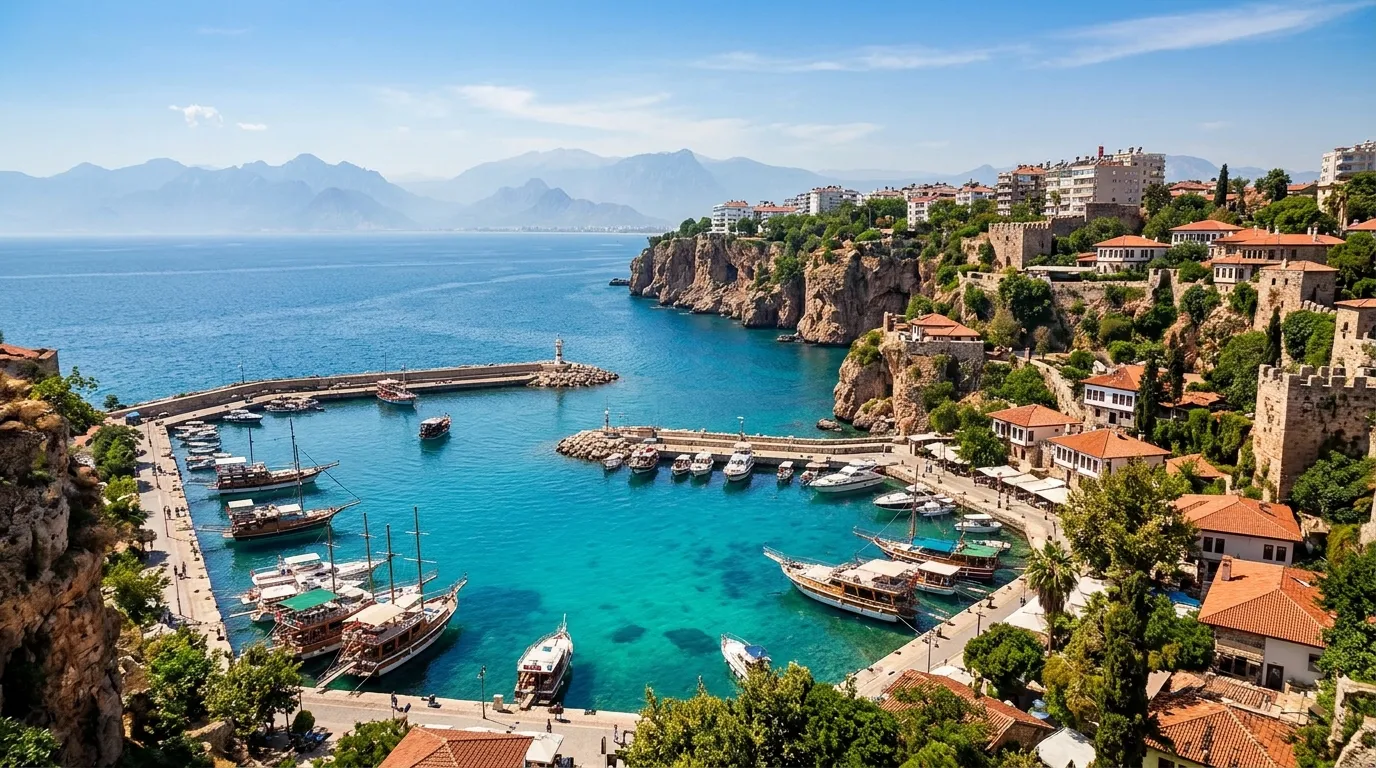
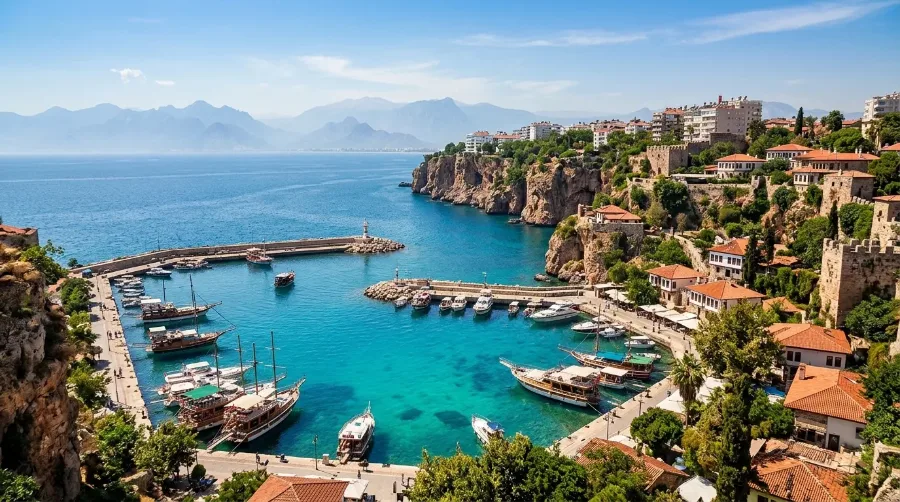
Mersin is a province and metropolitan municipality in southern Turkey (plate code 33), formerly called İçel, on the Mediterranean coast between Antalya and Adana. Wikipedia gives an area of 16,010 km2 and a population of 1,916,432 in 2022 (the official directorate site gives 15,853 km2 and 1,840,425 at the end of 2019; the figures conflict because they refer to different measurements and years). It has 13 districts: four (Akdeniz, Mezitli, Toroslar and Yenişehir) form Mersin city, and the others are Anamur, Aydıncık, Bozyazı, Çamlıyayla, Erdemli, Gülnar, Mut, Silifke and Tarsus. It borders Adana, Antalya, Niğde, Konya and Karaman.
About 87% of the land is mountainous, reaching into the central Taurus Mountains, and the coast has 321 km of coastline and fertile flatlands, the largest being the Tarsus plain. In antiquity the coast was part of Cilicia, with Tarsus as its capital and Mersin as its seaport. The province was renamed Mersin on 28 June 2002.
Wikivoyage describes the city of Mersin as a port city of about 1.1 million, nearly merged with Tarsus and Adana, and a convenient stop for breaking a coastal journey; it says there is no real beach and that the waterfront is on reclaimed land. The province’s main attractions lie along the coast and in the hills: Tarsus, Silifke, Kızkalesi and several ancient towns.
Best time to visit
Wikipedia describes a Mediterranean climate with very hot, dry summers and mild, wet winters; snow falls only in the mountains, not on the coast. Wikivoyage’s climate chart shows wet winters, with December the wettest month, and hot summers, with July and August highs around 32 to 33°C. No source names a best season. The official directorate also mentions highland plateaus (yaylas), such as Fındıkpınarı in Mezitli, which offer a cooler setting than the coast.
How to get there
- By air: Çukurova Airport (COV), about 50 km east, opened in 2024 and replaced Adana’s airport, with frequent flights from Istanbul, Ankara and İzmir.
- By sea: Ferries run from Kyrenia in Northern Cyprus. Fast catamarans for foot passengers run only in summer (about 80 minutes), and a year-round car ferry also runs. Ferries to Taşucu, west of Mersin, also leave from Kyrenia.
- By bus: Mersin Otogar is about 8 km north-west of the centre. Direct buses run from Istanbul (about 14 hours), Ankara (about 4 hours) and Gaziantep (about 4.5 hours), and coastal buses run from Antalya.
- By train: Wikivoyage says trains from Adana are suspended until 2026 because of tunnel construction in Tarsus; check current status.
- Mountain passes: The Gülek Pass (1,050 m) and the Sertavul Pass near Mut are the main crossings through the central Taurus Mountains, according to the official directorate.
Main places to see
Tarsus. Birthplace of St Paul, with his house and well as pilgrimage sites. Wikivoyage says the city is mostly modern but has a rich religious heritage.
Silifke. The site of ancient Seleucia in Isauria and the Aya Tekla church; Wikivoyage calls it mainly a transport hub that has several sights. The official site names Uzuncaburç in Silifke.
Kızkalesi (Maiden’s Castle) and Cennet-Cehennem. Narlıkuyu, about 60 km west of Mersin, is the access point for Kızkalesi and the Heaven and Hell chasms.
Soli (Pompeiopolis). Graeco-Roman ruins 11 km west of the city, with re-erected columns.
Yümüktepe. A mound with layers of occupation from Neolithic times to about 200 AD.
Anemurium and Elaiussa Sebaste. Ancient towns named by Wikipedia.
Alahan Monastery. Named by Wikipedia among the notable sights.
Mamure, Kızkalesi and Namrun castles. Named by Wikipedia.
Yerköprü Waterfall. Named by Wikipedia.
City sights. Mersin Ulu Cami (the Grand Mosque, originally built in 1898), the 1.2 km Atatürk Park waterfront promenade, St Anthony Catholic Church (built in 1855), the Atatürk House Museum, the Archaeology and Naval museums and, on the official site, the Nusret minelayer ship and the Mustafa Erim Mersin City History Museum.
Göksu Delta. The official directorate says 334 of Turkey’s 450 bird species can be seen there.
Getting around
- Dolmuşes and taxis: These run along the main streets of Mersin. Dolmuş service from the bus station to the centre may be included in the bus fare, so ask when booking.
- Coastal towns: Silifke, Narlıkuyu and Kızkalesi are west of the city and need a bus, dolmuş or car.
- Soli and Yümüktepe: Both are close to the city; Soli is 11 km west.
- Mountain areas: Plateaus and passes need a car.
Practical tips for visitors
- Mersin has 4G coverage from all Turkish carriers.
- Budget hotels cluster on Mersinli Ahmet Street, near the former bus station site.
- Local foods include tantuni (minced fried meat wrap), künefe (cheese pastry in syrup) and şalgam (a fermented carrot and bulgur drink).
- Eating places are spread through the downtown area, with no standout district.
- Do not expect a city beach; the beaches are further along the coast.
- Check hours and closures of museums and archaeological sites before visiting.
- Plan summer sightseeing for the morning, because summers are hot.
- Plate code
- 33
